A warehouse can lose valuable time before the first pallet moves. A forklift enters a lane, retrieves the front pallet, and leaves the remaining loads ready for the next pick. That simple sequence is the appeal of Push-Back Storage. It uses inclined rails and nested carts to store multiple pallets deep, typically allowing loading and retrieval from the same aisle. But the right system depends on more than storage density.
For 2026, warehouse teams should compare lane depth, pallet condition, load weight, carton or pallet overhang, and the number of pallet positions they need. A lane that looks efficient on a layout can become awkward if forklifts cannot handle its loads cleanly. Test the real pallet, not just the drawing. Small details matter.
A reliable selection process also considers throughput, inventory rotation, rack protection, and operator visibility. Push-back lanes generally work best when each lane holds one SKU and last-in, first-out access fits the operation. They may be a poor match for goods requiring strict first-in, first-out handling. That limitation deserves attention. So does maintenance: wheels, rails, and carts need inspection, and damaged pallets can disrupt smooth movement.
No verified expert quotation was supplied for this topic, so this introduction avoids attributing an invented statement to a named specialist. The guide will instead assess system features, practical trade-offs, and questions to raise with qualified rack designers and suppliers. It will focus on choices that can be checked on the warehouse floor, where space, safety, and daily work meet.
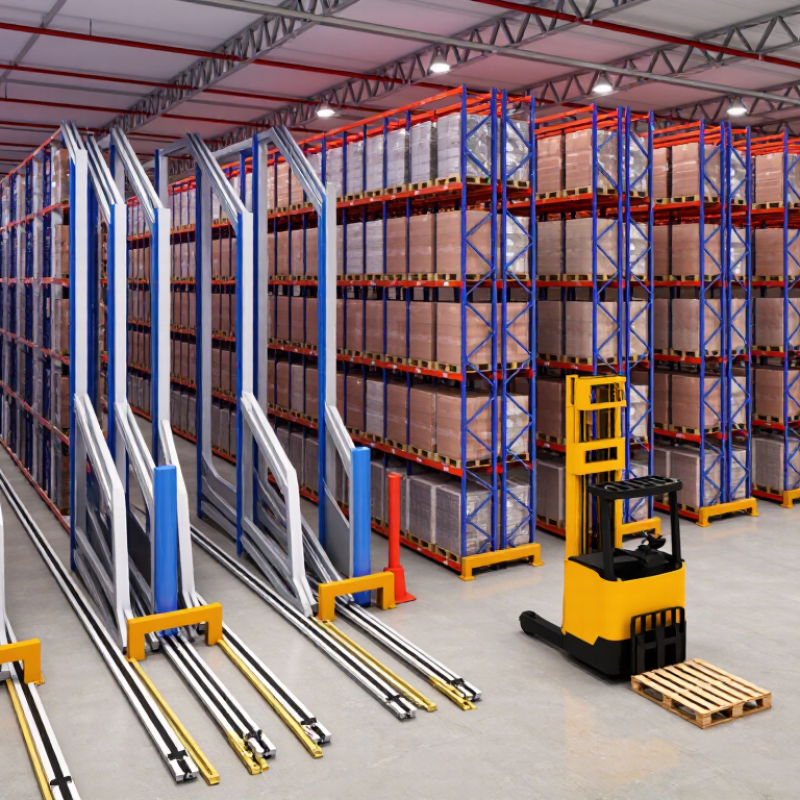
A push-back storage system is a compact pallet-racking solution for high-density warehouse storage. It uses inclined rails or nested carts inside each rack lane. Operators load pallets from one aisle, pushing earlier pallets deeper into the lane. When a pallet is removed, gravity moves the next pallet forward. It is not magic.
This design usually follows a last-in, first-out pattern. It suits reserve inventory, seasonal goods, and products with several pallets per stock-keeping unit. Forklift travel can decrease because loading and unloading happen from one aisle. However, product rotation is less precise than in a first-in, first-out system. That trade-off is easy to underestimate.
During a site review, a storage engineer should check pallet dimensions, load weight, rack height, aisle width, and floor condition. Every lane needs compatible rails, carts, and pallet supports. Uneven loading may affect movement and create unsafe pressure inside the rack. Staff also need clear loading rules and regular inspections. In practice, a push-back system can save valuable floor space, but poor planning can make access slower. The “best” system depends on inventory behavior, not storage density alone. Some warehouses discover this too late.
How Push-Back Racking Works in a Warehouse
Push-back racking stores pallets on nested carts or inclined rails. Forklifts load from one aisle side. Each new pallet pushes the previous pallet deeper into the lane. When unloading, gravity moves the next pallet forward. This creates compact, high-density storage without requiring access to every pallet.
The system suits warehouses handling several pallets of the same product. It normally supports two to six pallet positions per lane, depending on the design and load rating. However, push-back storage follows a last-in, first-out pattern. That matters for dated goods. A warehouse team should confirm rotation requirements before choosing this layout. WERC’s DC Measures Annual Survey reports inventory accuracy near 99.5% among leading distribution operations. Poor location discipline can quickly undermine that benchmark.
MHI’s 2024 Annual Industry Report found that 55% of supply chain professionals planned to increase technology investment. Yet automation cannot correct unsafe loading habits. Operators must verify pallet condition, cart movement, clearances, and rated capacity. Rack inspections should follow applicable engineering and workplace-safety requirements, including ANSI/RMI MH16.1 guidance where relevant. One practical test is simple: watch a forklift load the deepest position during a busy shift. Small alignment problems become obvious. Push-back racking is not a perfect fit. It can reduce aisle travel, but it may limit product selectivity and complicate stock rotation.
Push-back racking stores pallets on nested carts that move along inclined rails. Forklifts load and retrieve pallets from the front, allowing last-in, first-out (LIFO) handling and typically providing 2–6 pallet positions deep. The chart compares common storage-depth ranges across major pallet-racking configurations. Actual capacity depends on pallet dimensions, rack height, aisle width, load weight, and warehouse design.
Push-back storage systems use inclined rails, carts, or rollers to store pallets behind one another. Forklifts load each pallet from the aisle. The new pallet gently pushes older pallets deeper into the lane. This design suits warehouses handling several pallets of the same product.
Cart-based systems are common for two to six pallets deep. Each pallet rests on a movable cart, reducing direct pallet contact. They work well when storage density matters. However, cart movement depends on accurate loading and balanced pallet weights. Uneven pallets can create resistance. That detail is easy to overlook.
Wheel-bed systems use linked wheels or rollers beneath the pallets. They usually offer smoother movement and faster loading. Roller designs may handle heavier loads, but they need careful level checks and routine cleaning.
Push-back layouts normally follow the last-in, first-out method. This fits stable products with predictable rotation. It may not suit items requiring strict date control. A FIFO flow rack could be better there. Not every dense solution is efficient.
Warehouse teams can also choose two-deep, four-deep, or deeper configurations. Deeper lanes improve capacity but reduce access to individual pallets. I recommend checking SKU turnover, pallet quality, forklift reach, and aisle width before selecting a type. A short site trial often exposes problems that drawings miss. In practice, the most expensive mistake is choosing depth before understanding daily movement.
Comparing push-back storage systems in 2026 starts with your warehouse reality, not a catalog photograph. Measure pallet dimensions, load weights, aisle width, ceiling height, and available depth. Then review SKU velocity. Push-back storage suits warehouses holding several pallets of the same product, especially when space is more valuable than direct access. It usually follows a last-in, first-out flow, so it may not suit goods requiring strict first-in, first-out rotation. That detail is easy to miss.
Tips: Test one lane first. Watch loading speed, unloading control, pallet stability, and operator visibility. Ask for documented load ratings, installation tolerances, inspection procedures, and maintenance access. Check whether your forklifts can work comfortably within the proposed aisle dimensions. Small clearance problems become daily delays.
In practical comparisons, examine cart or roller performance under real pallet conditions. Dust, uneven pallets, damaged boards, and temperature changes can affect movement. I once assumed a heavier load always meant a stronger system was needed. The better answer depended on load distribution and pallet quality. That mistake changed the way I review specifications. Compare usable positions, not only total capacity. Calculate travel time, replenishment frequency, and labor per pallet movement. Include impact protection and routine inspections. A system that saves floor space but slows picking may not deliver the expected return. Request a layout simulation or trial installation when possible. Real warehouse behavior often differs from drawings.
Push-back storage systems can increase pallet density, but safe operation depends on matching each load to the rack’s design. Post clear capacity limits and keep them visible from forklift positions. Operators should center pallets, use compatible pallet sizes, and avoid pushing loads unevenly. A crooked pallet can catch on a cart or rail. Keep people out of active loading and retrieval lanes, and never climb into the rack. Inspect frames, beams, braces, anchors, carts, and end stops for impact damage or movement. If a component looks bent or cracked, stop using the affected bay until a qualified person assesses it.
Maintenance needs a routine, not just a response to visible damage. Check wheels, rollers, rails, and retainers for wear, debris, and smooth travel. Remove loose wrapping and broken pallet pieces promptly; they can obstruct carts. Follow the system maker’s instructions for lubrication and repairs, since excess lubricant may attract dust. Record inspection dates and defects, even when they seem minor. A checklist helps, but it can miss problems hidden behind stored pallets. Make space for closer inspections. Do not alter rack components or swap parts without technical approval.
Tips: Train operators on controlled fork movement and correct loading. Keep aisles clear and capacity signs readable. After an impact, isolate the bay and report it; don’t rely on a quick visual glance alone.
Forklifts load pallets from one aisle side. Each new pallet pushes the previous pallet deeper into the lane. Gravity moves the next pallet forward during unloading.
Most lanes hold two to six pallet positions. The exact number depends on rack design, pallet weight, and rated capacity. Check the load signs.
Usually, no. Push-back racking normally follows last-in, first-out movement. It may complicate rotation for dated goods or products with strict freshness requirements.
It suits warehouses storing several pallets of the same product. It saves floor space when direct access matters less than storage density. Selectivity becomes limited.
Measure pallet size, load weight, aisle width, ceiling height, and available rack depth. Review product velocity and replenishment frequency. Drawings can mislead.
Test one lane during a busy shift. Watch deep-position loading, unloading control, pallet stability, and forklift visibility. Small alignment problems become obvious quickly.
Center every pallet and confirm compatible pallet sizes. Keep people outside active lanes. Never climb into the rack. Stop using bays with bent or cracked parts.
Inspect wheels, rollers, rails, retainers, frames, beams, braces, anchors, and end stops. Remove wrapping and broken pallet pieces promptly. Record minor defects too.
Isolate the affected bay immediately and report the impact. A quick visual glance may miss hidden damage. A qualified person should assess the rack before reuse.
This guide explains how Push-Back Storage systems improve warehouse capacity by using inclined lanes that allow pallets to move smoothly toward the loading and unloading position. Instead of requiring forklifts to enter each storage lane, operators load pallets from the front, pushing earlier loads deeper into the rack. The article reviews how this last-in, first-out arrangement works and introduces common system variations, including cart-based and wheeled configurations designed for different pallet weights, lane depths, and throughput requirements.
For warehouses planning upgrades in 2026, the guide outlines how to compare systems according to available space, inventory rotation, pallet dimensions, load capacity, forklift compatibility, and expected operating volume. It also highlights essential safety and maintenance practices, such as keeping lanes clear, inspecting rails and components, observing rated capacities, training operators, and scheduling regular checks. By balancing density, accessibility, cost, and operational safety, warehouse managers can select a Push-Back Storage solution that supports reliable performance and efficient use of space.

Xinmiao Storage