Global buyers are entering 2026 with tighter budgets, shifting trade routes, and higher expectations for equipment reliability. Steel Containers remain central to this market because they protect cargo, support intermodal transport, and tolerate repeated handling. Their value is visible at the loading dock: reinforced corner castings, clean door seals, and floors that withstand forklifts.
The United Nations Conference on Trade and Development reported in its Review of Maritime Transport 2024 that global maritime trade reached approximately 12.3 billion tons in 2023. It also highlighted continuing disruption, capacity pressure, and route uncertainty. These conditions make container availability, structural strength, and repair support increasingly important. The World Steel Association’s 2024 outlook also shows why buyers must watch steel demand and pricing closely. Material costs can influence both new-container quotations and refurbishment decisions.
This guide examines the 2026 Steel Containers most relevant to international purchasers. It compares standard dry containers, high-cube units, open-top designs, side-open models, tank containers, and specialized storage solutions. The assessment considers ISO dimensions, CSC compliance, corrosion protection, payload, lifecycle cost, and supplier documentation. A cheaper unit may hide weak welds or limited after-sales support. That is easy to miss.
No ranking is perfect. Local climate, cargo type, port handling, and route length can change the best choice. Buyers should verify inspection records, plate details, coating specifications, and applicable national requirements before signing contracts. Practical experience matters here. A container that looks excellent in a catalogue may perform poorly after months near salt air, heavy rain, or uneven yard surfaces. Reliable purchasing requires evidence, not attractive promises.
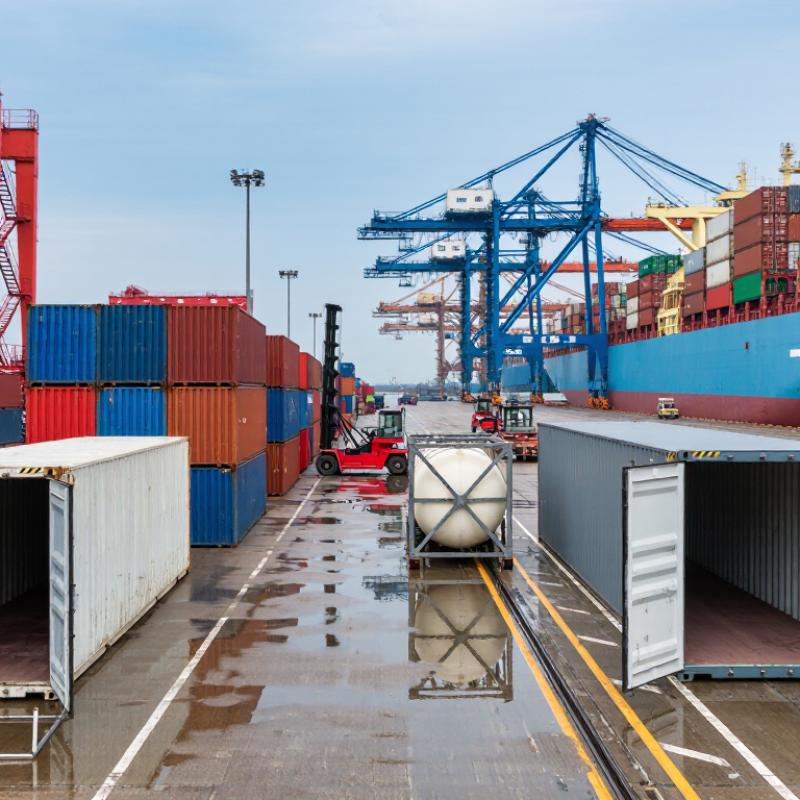
What Are the 2026 Top Steel Containers for Global Buyers?
For 2026 procurement, ISO 668 dimensions remain a practical starting point. A standard 20-foot steel container measures about 6.058 meters long, 2.438 meters wide, and 2.591 meters high externally. Its planning capacity is listed at 28.3 m³. This size suits dense cargo, machinery, spare parts, and shipments that may not fill a longer box. It is also easier to position at smaller warehouses. Door clearance matters. The usable opening is smaller than the external width and height.
The 40-foot unit keeps the same approximate width and height, but extends to 12.192 meters. Its stated capacity reaches 67.7 m³, offering more room for cartons, pallets, and lightweight cargo. However, extra space does not always mean better value. A half-empty 40-foot container may waste freight cost and storage space. Weight distribution also needs attention, especially near the doors and floor ends. ISO 668 defines key dimensional standards, but actual internal volume varies with wall design, flooring, fittings, and manufacturing tolerances. A neat spreadsheet can still mislead. I recommend checking usable length, door dimensions, tare weight, and maximum gross weight before ordering. Small measurements often decide whether cargo loads smoothly or requires costly repacking.
For global buyers in 2026, ISO 1496 dry containers remain practical for standardized cargo handling. ISO 1496-1 covers structural performance, while ISO 668 defines key dimensions and ratings. A 30,480-kg gross mass rating supports heavy cargo across road, rail, and sea transport. The stated 28,750-kg payload sounds attractive, but buyers must check tare weight carefully. A steel container with that payload would require an unusually low tare. Treat the figure as a specification to verify, not a promise.
UNCTAD’s Review of Maritime Transport 2024 reported 2.4% growth in global maritime trade during 2023. It also projected further growth in 2024. More cargo increases demand for durable, interoperable equipment. In field inspections, corner castings, door seals, floor condition, and frame alignment often reveal more than paint quality. Corrosion around the roof rails deserves attention. Small damage can become expensive.
Tips: Request the container’s test certificate, tare weight, maximum gross mass, and payload calculation. Confirm CSC compliance where required. Inspect the floor from inside and underneath. Do not rely on catalogue numbers alone. Some specifications are optimistic.
High-cube steel containers stand 9'6" tall externally, about one foot higher than standard 8'6" units. That extra height can provide roughly 12% more internal volume, depending on the container’s length, width, and construction. For lightweight cargo, this space may reduce the number of units needed. Furniture, packaged machinery, insulation panels, and retail fixtures often benefit from the added vertical clearance.
The practical details matter. A typical high-cube unit offers more room above stacked pallets, but usable space depends on corner posts, door frames, flooring, and cargo shape. I have found that irregular products often waste the extra volume. They look spacious during inspection, yet loading plans can still become tight. Measure cartons, pallet heights, and forklift access before ordering. Small errors become expensive overseas.
Buyers should also compare tare weight, payload rating, door condition, roof integrity, and corrosion around the lower rails. A newer unit is not automatically the better choice. Inspection records, valid safety documentation, and clear repair history provide stronger evidence than appearance alone. Check terminal clearance and local transport limits before shipment. The extra height can create problems under low bridges, warehouse doors, or loading equipment. High-cube steel containers are valuable tools, but their benefits depend on disciplined measurement and realistic cargo planning.
Reefers are essential for cargo that must remain between -25°C and +25°C during international transport. This range supports frozen foods, fresh produce, pharmaceuticals, and temperature-sensitive ingredients. However, the container does not correct poor loading practices. It only controls the air around the cargo.
Experienced logistics teams check the cooling unit, door seals, drainage, and data logger before loading. The set point should match the cargo specification, not a rough estimate. Pre-cooled cargo helps stabilize the internal temperature. Air must move beneath and around the pallets. Blocking the floor channels can create warm pockets, even when the display shows the correct temperature. Small details matter.
Tips: Leave space between the cargo and side walls. Use calibrated sensors at different levels. Record temperatures during loading, transfer, and unloading. Ask a qualified technician to inspect repeated alarms. A backup power plan is also wise.
One weak point remains: temperature readings can look reassuring while the product core changes slowly. That is why records need context, including loading time, outside weather, and door openings. We have seen plans fail because staff trusted one sensor too much. A reefer is reliable equipment, but it is not a substitute for careful handling. Fresh cargo deserves disciplined routines. Mistakes still happen.
For global buyers, steel containers are not ready for service merely because their walls look straight. CSC compliance begins with a documented safety examination before the container enters international transport. The approved unit receives a durable safety approval plate. It records identification details, maximum operating weight, stacking limits, and examination information. Check the plate carefully. Faded markings can create costly delays.
The first periodic examination is generally required within five years of manufacture or initial approval. After that, inspections must occur at intervals of no more than 30 months. The inspection should cover the frame, corner castings, doors, locking rods, roof, floor, and visible welds. Inspectors also look for corrosion, distortion, cracks, and unauthorized structural repairs. A small dent may be harmless, but damage near a corner casting deserves immediate technical review.
Timing is not the only issue. Records must match the container’s identification number and current condition. Buyers should request examination reports, repair histories, and photographs before shipment. An experienced inspector can detect weaknesses that a quick yard check misses. Still, the process is not flawless. Documentation may be incomplete, and visual checks cannot reveal every hidden defect. That uncertainty deserves attention, especially when containers will face heavy stacking, rough handling, and repeated ocean voyages. Local authorities and authorized inspection bodies may apply additional procedures, so purchasing teams should verify current requirements before release.
It describes the container and cargo together. Road, rail, and sea rules may still impose lower limits.
Not automatically. Check the tare weight, certificate, and payload calculation before accepting that figure.
Examine corner castings, door seals, floors, frame alignment, roof rails, and corrosion. Small damage matters.
It can maintain roughly -25°C to +25°C, but correct loading remains essential. The unit controls air, not product cores.
Pre-cool the cargo, leave space near walls, and keep floor air channels clear. Airflow needs room.
Record temperatures during loading, transfers, and unloading. Include door openings, loading time, and outside weather.
The container needs documented safety approval and a durable plate showing identification, weight limits, and examination details.
The initial examination is generally due within five years. Later examinations usually occur no more than 30 months apart.
No. Inspectors may miss hidden defects, incomplete records, or weak repairs. A quick yard check is not enough.
Request the test certificate, tare weight, examination reports, repair history, photographs, and current identification details. Verify everything.
Steel Containers remain a practical choice for global cargo transport because they combine standardized dimensions, strong construction, and flexible loading options. Under ISO 668, the common 20-foot unit provides approximately 28.3 m³ of internal volume, while the 40-foot unit offers about 67.7 m³. ISO 1496 dry containers are designed for a maximum gross mass of 30,480 kg and a payload of up to 28,750 kg, subject to equipment specifications and transport requirements.
For cargo that needs additional capacity, high-cube containers provide a 9'6" external height and roughly 12% more volume than standard units. Refrigerated containers, or reefers, support temperature-sensitive goods across a range of approximately −25°C to +25°C. Safety and international usability also depend on CSC compliance, including an initial examination within five years of manufacture and follow-up inspections generally scheduled at 30-month intervals. Together, these features help buyers select containers according to cargo type, volume, weight, temperature, and operational requirements.

Xinmiao Storage