Choosing the right storage system is not just a matter of fitting shelves into an open space. Vertical Racks can improve access and make better use of vertical room, but only when their design suits the items, workflow, and building conditions. For a warehouse, workshop, or stockroom, small choices can affect daily safety and speed. A rack that looks sturdy may still be poorly suited to long materials, uneven floors, or frequent picking. Small details matter. Think about beam height, aisle width, load labels, and whether forklifts or hand carts need clear turning space. These are practical checks, not decorative extras. A sound decision starts with accurate measurements and a realistic picture of how stock moves.
This guide offers seven tips for comparing rack types, materials, capacity, adjustability, installation needs, and ongoing inspections. It also explains why buyers should verify manufacturer load ratings and follow site-specific advice from qualified professionals. Never estimate capacity by appearance. Product specifications, floor conditions, and the shape of stored goods all matter. A compact system may save floor space yet make replenishment awkward. A taller rack can add capacity, but may require suitable equipment and careful access planning. Trade-offs are easy to miss. Even a useful checklist cannot replace an on-site assessment; that limitation deserves attention. Use these tips as a starting point, then revisit the plan after staff have tested the layout. Good storage should work on ordinary days. And on hectic ones.
7 Tips for Choosing the Right Vertical Racks
Understanding Vertical Racks and Their Common Uses
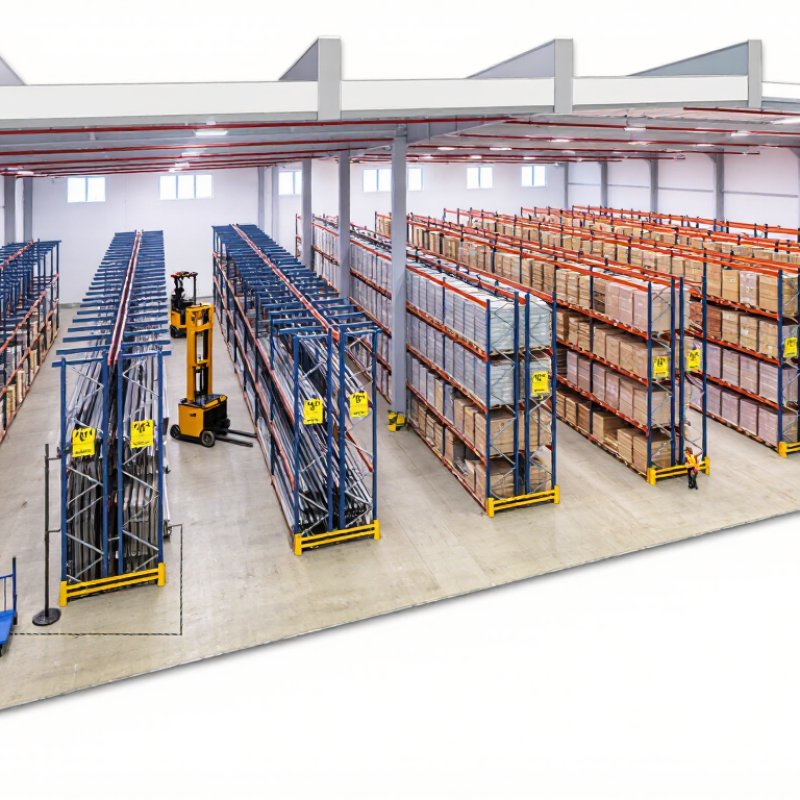
Vertical racks store long or flat materials upright, using floor space efficiently. Common examples include lumber, pipes, metal bars, sheet goods, and doors. Instead of stacking everything horizontally, workers can see and reach individual pieces more easily. That matters in a busy workshop, warehouse, or building-supply area.
The rack’s shape should match the material. Narrow compartments can help separate pipes by diameter, while wider bays may suit plywood or panels. Check how items rest against the supports: a large sheet leaning at a sharp angle may bow or become unstable. Measure the tallest and heaviest pieces you expect to store, then compare those dimensions with the rack’s stated limits. Do not assume every upright rack handles the same load.
Access matters, too. Leave enough room to remove one piece without dragging neighboring materials across sharp edges. Consider whether items will be loaded by hand or with lifting equipment, and keep aisles clear for that process. Floor condition and anchoring requirements deserve attention; a rack that looks solid can still shift if installed poorly. It is easy to focus on capacity and overlook daily handling. That is a common mistake. A quick trial with typical materials can reveal awkward reaches or blocked sightlines before the storage area fills up.
Plan for the material you store. For lumber, board width affects how much space each piece needs. These typical U.S. dressed-lumber widths can help when estimating rack capacity.
Typical actual widths of surfaced boards in inches. Actual dimensions may vary by product and applicable standards. Allow additional space for safe loading and removal.
Tip 1: Measure before selecting. Record each item’s length, width, height, and shape, including handles or projecting ends. Check the rack’s usable opening, not just its outside dimensions. Leave room to lift items clear without striking nearby beams.
Tip 2: Map what you store. Separate frequently picked stock from slow-moving items, and note seasonal peaks. A rack sized for average inventory may feel cramped during a busy week. That estimate can be wrong.
Tip 3: Calculate the heaviest realistic load. Weigh the item and any packaging, then check the rack’s rated capacity per arm, level, or bay. Do not assume evenly distributed weight if bundles sit mostly at one end. The U.S. Bureau of Labor Statistics reported 2.4 recordable injury and illness cases per 100 full-time-equivalent workers in private industry in 2023. This is broad workplace data, not evidence that rack choice alone causes injuries; it reinforces the value of careful handling plans.
Tip 4: Match access to the load. Long pipes may need more clearance than boxed stock, while dense metal bars can exceed capacity quickly. Confirm how the rack will be loaded and unloaded, and ask a qualified supplier to verify the proposed configuration against its published ratings. Leave a little room for change. Inventory rarely stays exactly as planned.
Choosing a vertical rack starts with its material and the space around it. Steel often suits heavier loads, but chipped coatings can expose it to moisture and corrosion. Aluminum is lighter and easier to reposition, though its capacity depends on the design and profile. Timber can work for lighter storage, but humidity may cause swelling or movement. Small details matter.
Compare the rated capacity per arm with the rack’s total rating. They are not interchangeable. A rack may support a substantial overall load yet have weaker individual arms. Check whether the figures assume evenly distributed weight; a concentrated load, such as one heavy box near an arm’s edge, can change the strain. Also inspect the wall or floor fixing requirements. A strong rack cannot compensate for a weak mounting surface.
Durability comes from more than material choice. Look closely at joints, welds, fasteners, and protective finishes, especially where items slide in and out. In a dusty workshop, inspectable connections may be more useful than a polished appearance. Check for movement after installation, and reassess the rack if its load or location changes. Ratings can be easy to overlook. I would not assume that a thicker-looking post is automatically safer; the manufacturer’s documented limits and the installation conditions deserve equal attention.
| Tip | What to Check | Steel Racks | Aluminum Racks | Practical Selection Check |
|---|---|---|---|---|
| 1. Match the rack to the material | Confirm the rack’s intended use, such as storing sheet goods, panels, pipes, or long stock. Check how the stored items will contact the uprights and supports. | Often selected for heavy-duty storage. Steel density is approximately 7.85 g/cm³, so steel components are generally heavier than comparable aluminum components. | Often useful where lower rack weight is important. Aluminum density is approximately 2.70 g/cm³, about one-third the density of steel. | Compare the complete rack design, not material names alone. Section shape, thickness, bracing, connections, and base design all affect performance. |
| 2. Verify rated load capacity | Check the rated capacity for each storage position and for the complete rack. Confirm whether the rating applies to evenly distributed loads or a specific load arrangement. | Steel racks can be engineered for high loads, but capacity depends on the steel grade, member dimensions, connections, and rack configuration. | Aluminum racks can also be engineered for substantial loads, but capacity depends on alloy, section geometry, connections, and configuration. | Use the rack’s load placard or engineering documentation. Do not infer capacity from material or appearance; ask a qualified supplier or engineer if ratings are unavailable. |
| 3. Measure the stored items | Record the maximum item length, width, thickness, and weight, including packaging or attachments. Check how many items will be stored in each bay. | Confirm that the rack’s usable opening and support spacing accommodate the items without excessive overhang or concentrated loading. | Apply the same dimensional checks. A lighter rack still needs adequate support spacing and a suitable design for the item’s weight and shape. | Measure the largest intended item, not just the average. Allow handling clearance and follow the rack design’s permitted overhang limits. |
| 4. Choose suitable corrosion protection | Assess moisture, outdoor exposure, cleaning chemicals, salt, and temperature conditions at the installation site. | Unprotected steel can corrode when exposed to moisture. Painted, powder-coated, or galvanized finishes can help protect it, but damaged coatings may need attention. | Aluminum forms a protective oxide layer and generally resists atmospheric corrosion, but some chemicals and environments can still cause corrosion or surface damage. | Match the finish or alloy to the actual environment. For chemical exposure, verify compatibility with the chemical supplier or rack manufacturer. |
| 5. Check stability and anchoring | Review the rack height, base footprint, floor condition, anchoring requirements, and any specified seismic or impact protection. | Steel’s higher density can add component weight, but it does not by itself guarantee stability. Proper bracing, base design, and anchoring remain essential. | Lower material density can make components easier to handle, but the installed rack still needs appropriate stability measures and anchoring where specified. | Follow the installation drawings and anchor specifications. Have the floor and anchoring arrangement checked for the expected loads and site conditions. |
| 6. Inspect wear points and connections | Look at arms, dividers, contact surfaces, fasteners, welds, and areas likely to be struck during loading or unloading. | Inspect for corrosion, coating damage, cracked welds, bent members, and loose or missing fasteners. | Inspect for dents, cracks, damaged connections, fastener loosening, and wear or corrosion at contact points. | Set an inspection schedule based on use and site conditions. Remove damaged equipment from service until it has been assessed and repaired appropriately. |
| 7. Compare lifetime cost and upkeep | Consider purchase price, installation, handling, maintenance, finish repair, replacement parts, and expected service conditions. | May be a practical choice where high load ratings or broad availability of structural components are priorities. Protective finishes may require maintenance. | Lower component weight can ease handling in some applications. Suitability and long-term cost depend on the required capacity, environment, and design. | Compare documented specifications, warranty terms, inspection needs, and replacement-part availability—not purchase price alone. |
A vertical rack can free valuable floor space, but only if its height fits the room and its contents remain reachable.
Measure the ceiling, doorways, lights, pipes, and sprinkler clearance before comparing models. Then check the rack’s footprint against the aisle width, including room to turn with a loaded item.
A narrow aisle may look efficient on a plan but feel awkward in daily use. Measure twice.
Accessibility depends on what you store and how often you need it. Keep frequently handled items between waist and shoulder height; reserve higher levels for lighter, occasional-use goods.
Check whether shelves adjust without tools and whether labels remain visible from the aisle. Small details matter.
Safety deserves equal attention: confirm the stated load limits for each shelf and the full unit, and distribute weight evenly. Follow the maker’s installation instructions, including any required wall or floor anchoring.
Uneven floors can make a tall rack unstable, even when it appears secure.
It is easy to overlook the space needed to remove a long item; test the layout with a simple floor outline before installation.
Before choosing a rack, verify the floor’s load capacity, ceiling height, sprinkler clearance, aisle width, and access for forklifts. Compare these conditions with the rack’s rated loads and installation drawings. The Rack Manufacturers Institute’s ANSI MH16.1 standard provides engineering guidance for steel storage racks; have a qualified professional review unusual layouts or heavy loads.
Tip: Measure twice, including the space needed to install and service each frame. A tight fit can become a costly problem.
Plan for maintenance before installation. Confirm who will inspect the racks, how damage will be recorded, and whether replacement parts are available. Check anchors, beams, safety locks, and upright frames regularly, especially after a forklift strike or a change in stored loads. Keep damaged sections unloaded until a competent person assesses them; improvised repairs are risky. BLS reported about 2.6 million nonfatal workplace injury and illness cases in private industry in 2023. That figure is not rack-specific, but it underscores why safe storage deserves routine attention.
Small details matter.
Tip: Keep a simple inspection log with dates, photos, and follow-up actions. Review it when operations change. A rack that suited last year’s cartons may not suit today’s heavier pallets. Recheck load labels and installation requirements after any layout change, and involve the installer when the answer is unclear.
The inconvenient part? Inspections take time, and they can still miss hidden damage. That is a reason to make them consistent, not to skip them.
They hold lumber, pipes, metal bars, sheet goods, and doors. Upright storage makes individual pieces easier to see and reach.
Match each bay to the material. Narrow compartments can separate pipes by diameter, while wider bays suit plywood or panels. Check how sheets rest against the supports.
Compare the full-unit rating with each arm’s rating. They are different limits. Also check whether the rating assumes evenly distributed weight.
Steel often suits heavier loads, but chipped coatings can invite corrosion. Aluminum is lighter; timber may swell with humidity. No material solves every problem.
Measure the tallest and heaviest items, ceiling height, doorways, lights, pipes, and sprinkler clearance. Measure twice. Leave room to remove long pieces.
Keep frequently used items between waist and shoulder height. Place lighter, occasional-use goods higher. Keep labels visible from the aisle.
Uneven floors can make a tall rack unstable. Follow the installation instructions and check wall or floor fixing requirements. A solid-looking rack can still shift.
Mark the footprint and aisle on the floor, then try moving a typical sheet or pipe. I might overlook awkward turns on a plan; a quick trial helps reveal them.
Choosing the right Vertical Racks starts with understanding what they are designed to store and how they will be used. Consider the dimensions, quantity, and weight of your items, along with how often you need to access them. These details help determine the rack’s required capacity and whether its layout will suit your daily workflow. Compare materials and construction quality to find an option that can handle the expected load and remain durable over time.
Also assess how the rack will fit into your available space without blocking walkways or creating hard-to-reach storage. Look for practical safety features, such as stable support and secure storage positions, and make sure the installation requirements match your site. Finally, consider the care and upkeep needed to maintain the rack. A thoughtful choice can make storage more organized, accessible, and dependable for the long term.

Xinmiao Storage