China Top Drive in Storage Racking Suppliers?

Time:2026-09-20 Author:Mason
0%

Choosing China’s top Drive-in Storage suppliers requires more than comparing prices, catalogs, or polished factory photographs. A reliable evaluation examines steel grade, welding quality, load calculations, pallet compatibility, corrosion protection, and after-sales support. It also considers whether the supplier has completed similar projects in cold stores, food warehouses, or high-volume distribution centers.

Warehouse design expert F. Edward Frazelle emphasizes, “Storage is not an end in itself; it is a means of supporting material flow.” This principle fits Drive-in Storage closely. The system can improve space utilization by allowing forklifts to enter deep storage lanes. However, it may reduce selectivity and increase operational risks when pallets vary in size or condition. Small details matter. Rail alignment matters. Upright protection matters. Forklift training matters.

This guide examines China-based suppliers through an experience-led lens. It considers manufacturing capability, engineering documentation, testing practices, installation quality, and customer feedback. A low quotation may hide weaker steel, limited customization, or unclear warranty terms. That is easy to overlook.

The ranking should not be treated as permanent. Supplier performance can change with materials, management, and project scale. Buyers should request drawings, reference projects, inspection records, and independent load verification before making a decision. Even a strong supplier may not suit every warehouse. The best choice depends on product turnover, pallet access requirements, building height, and daily forklift behavior.
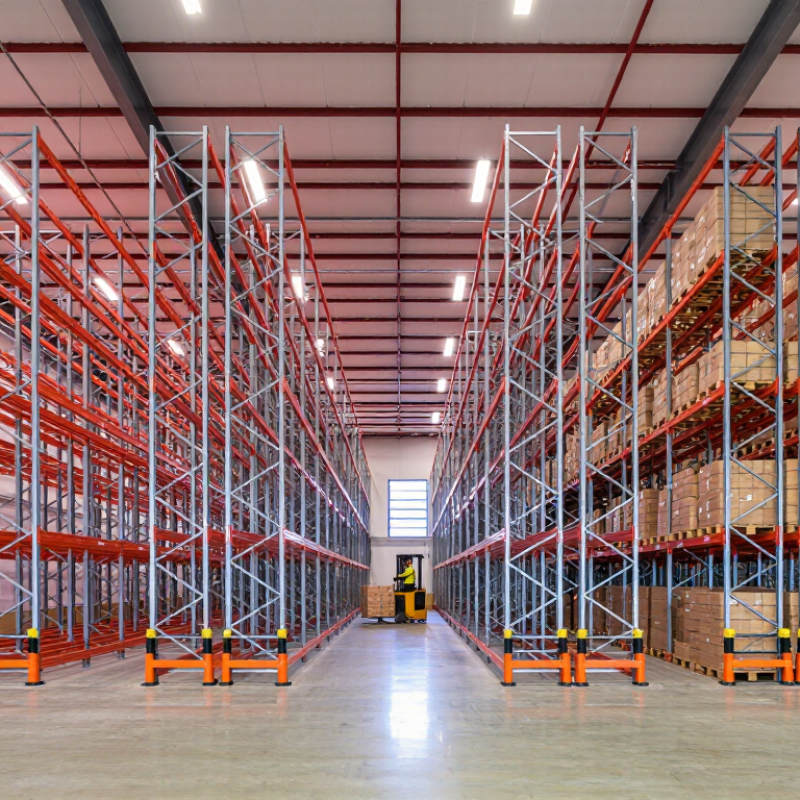
China Top Drive in Storage Racking Suppliers?

Definition of Drive-In Storage Racking

Drive-In Storage Racking: A Practical Definition for Chinese Supplier Evaluation

Drive-in storage racking is a high-density pallet system designed for similar products with limited stock-keeping units. Forklifts enter storage lanes and place pallets on horizontal rails. Unlike selective racking, it removes many aisles and uses warehouse depth more efficiently. Most systems operate on a last-in, first-out basis, although drive-through layouts can support first-in, first-out handling.

The design suits cold storage, seasonal goods, and bulk inventory. It is less suitable for products needing frequent individual access. A 2024 MHI Annual Industry Report found that 55% of supply chain professionals expected increased technology and innovation investment. That pressure makes storage density important, but density alone is not enough. A badly planned lane can create delays beside the loading dock.

When assessing Chinese suppliers

When assessing Chinese suppliers, buyers should review rail capacity, upright protection, pallet compatibility, and forklift clearance. EN 15629 and related FEM guidance emphasize application-specific design, load data, and installation controls. Ask for structural calculations, inspection procedures, and documented testing. These details matter more than a polished factory video.

I have seen one common mistake.

Warehouse teams often choose the deepest system available. That decision can reduce travel space and complicate stock rotation. Measure pallet dimensions, daily movements, temperature conditions, and emergency access first. The right drive-in rack is not simply the densest option. It is the safest workable balance between capacity, handling speed, and product discipline.

How Drive-In Racking Systems Work

China Top Drive-In Storage Racking Suppliers: How Drive-In Racking Systems Work

Drive-in racking stores pallets on parallel rails inside deep storage lanes. A forklift enters the lane, lifts a pallet, and places it on the next open position. It then reverses carefully. The same vehicle retrieves pallets from the front. This layout removes most aisle space. Grand View Research’s 2024 warehouse racking report forecasts a 9.8% compound annual growth rate through 2030. That trend reflects rising pressure to store more goods in costly facilities. Density is the main advantage.

The usual operating rule is last-in, first-out, or LIFO. Therefore, drive-in racking suits uniform products with predictable demand. Cold-storage warehouses often use it for repeated pallet loads. Operators should avoid mixing different stock-keeping units in one lane. That mistake can hide older inventory. The 2024 MHI Annual Industry Report surveyed more than 1,000 supply-chain professionals and found that 55% planned to increase technology investment. However, automation does not fix poor lane discipline. A simple location error still causes delays.

A reliable supplier assessment should examine rail strength, upright protection, forklift clearance, and pallet quality. Designers should calculate loads under uneven conditions. Real operations are rarely perfect. Damaged pallets may bend rails or block retrieval. Regular inspections should check impact marks, loose components, and overloaded positions. Drive-in systems save space, but they demand disciplined loading, clear procedures, and careful maintenance.

Key Features of Chinese Drive-In Racking Suppliers

China Top Drive in Storage Racking Suppliers?

Chinese drive-in racking suppliers are attracting attention because they combine dense storage design with competitive manufacturing capacity. Grand View Research estimates the global warehouse racking market will expand at about 5.9% annually from 2024 to 2030. This growth increases demand for space-efficient systems, especially in cold storage and distribution warehouses.

The key feature is lane depth. Forklifts enter the rack, place pallets on continuous rails, and reverse through the same opening. This design reduces aisles but usually supports fewer product varieties. It works best for uniform pallets with a last-in, first-out flow. Practical buyers should check rail thickness, upright tolerances, pallet compatibility, and forklift clearance. Small alignment errors can become serious after repeated impacts.

Reliable Chinese suppliers should provide steel traceability, load calculations, welding inspection records, and installation guidance. MHI’s 2024 Annual Industry Report states that 83% of supply chain professionals expect to increase technology and innovation investment within two years. That pressure makes measurable rack performance more valuable than attractive catalog images. Ask for load tests and project references.

One weakness is often overlooked. Drive-in racks can lose efficiency when inventory changes frequently. I would not choose them only because they save floor space. Corrosion protection, guide rails, column guards, and periodic inspections matter, particularly in humid warehouses. Supplier communication may also need improvement; technical drawings should state every tolerance clearly.

Key Features of Chinese Drive-In Racking Suppliers

Drive-in racking is commonly selected for high-density storage of homogeneous palletized goods. The chart presents typical industry specification ranges rather than data from any individual company or brand.

Typical ranges: pallet positions per lane, storage levels, pallet load capacity, and forklift aisle width. Actual specifications vary according to pallet size, rack height, building conditions, and local safety requirements.

Quality and Safety Standards for Supplier Selection

China Top Drive-in Storage Racking Suppliers?

Choosing a top drive-in storage racking supplier in China requires more than comparing prices. Quality begins with documented steel grades, verified load calculations, and controlled welding procedures. Ask for mill certificates, inspection records, and a clear explanation of allowable pallet weights. Do not accept a generic capacity chart. Each beam, upright, and connector should match the approved design.

During evaluation, inspect sample racks or request an independent factory audit. Look for dimensional checks, coating thickness records, and proof of weld inspection. Load testing should reflect real pallets, forklift impacts, and uneven floor conditions. Safety documentation must also address installation, anchoring, aisle clearance, and emergency procedures. Relevant standards may differ by country, so confirm local engineering and fire requirements before purchase.

Certificates alone are not enough. Traceability matters. Reliable suppliers explain corrective actions when defects appear and preserve batch records after delivery. That response reveals more than polished brochures. I once treated a clean sample as proof of consistent production; that was too optimistic. Factory controls can change, and small variations may affect alignment or safe loading. Require pre-shipment inspection, installation guidance, and a realistic warranty process. Keep the conversation technical, written, and specific.

Comparison of China’s Leading Drive-In Racking Manufacturers

Comparing China’s Leading Drive-In Racking Manufacturers

China’s leading drive-in racking manufacturers differ in engineering depth, testing routines, and project support. A serious comparison should examine more than steel thickness or quoted price. Experienced suppliers calculate pallet loads, forklift clearance, seismic conditions, and lane depth before production. Their drawings should show upright spacing, rail levels, bracing positions, and allowable tolerances.

Factory quality control creates another clear difference. Strong manufacturers use traceable steel certificates, automated welding checks, coating inspections, and documented load tests. Some facilities also verify beam deflection under simulated pallet weight. Fit matters more. A few millimeters can affect forklift entry, pallet stability, and storage density. Buyers should request inspection records, sample drawings, and installation instructions before signing a contract.

After-sales capability deserves equal attention. Reliable suppliers provide assembly guidance, replacement-part lists, and practical maintenance advice for damaged rails or uprights. One weakness appears repeatedly: technical documents may be accurate but difficult for overseas teams to apply. Clear diagrams and responsive communication reduce that risk. Small errors compound. A careful buyer should compare warranty terms, delivery controls, corrosion protection, and engineering calculations together. The lowest offer may save money initially, yet create costly adjustments during installation.

China Top Drive-in Storage Racking Suppliers? - Comparison of China’s Leading Drive-In Racking Manufacturers
Comparison Dimension Supplier Profile A Supplier Profile B Supplier Profile C Supplier Profile D Supplier Profile E
Primary Manufacturing Focus Drive-in and drive-through pallet racking Heavy-duty warehouse storage systems Cold-storage and high-density racking Customized industrial racking projects Standardized pallet-storage equipment
Typical System Type Last-in, first-out drive-in storage Drive-in and drive-through configurations Drive-in systems for chilled and frozen warehouses Project-specific drive-in layouts Modular drive-in pallet racking
Typical Pallet Load Capacity 500–1,500 kg per pallet position 800–2,000 kg per pallet position 600–1,500 kg per pallet position 1,000–2,500 kg per pallet position 500–1,500 kg per pallet position
Recommended System Height 2–8 m 3–10 m 2–8 m 3–12 m, subject to engineering review 2–8 m
Storage Depth Capability 2–8 pallets deep 2–10 pallets deep 2–8 pallets deep 2–12 pallets deep 2–8 pallets deep
Compatible Forklift Types Reach truck and counterbalance forklift Reach truck, counterbalance forklift and drive-in forklift Reach truck and cold-store-rated forklift Reach truck, counterbalance forklift and specialized deep-lane equipment Reach truck and counterbalance forklift
Common Upright Profile Range 80–110 mm face width 90–120 mm face width 80–110 mm face width 90–140 mm face width 80–110 mm face width
Common Steel Thickness Range 1.5–3.0 mm 1.8–3.5 mm 1.5–3.0 mm 2.0–4.0 mm 1.5–3.0 mm
Surface Treatment Options Powder coating; optional galvanized components Powder coating and hot-dip galvanizing Powder coating; galvanized steel for humid environments Powder coating, galvanizing and corrosion-resistant finishes Powder coating with standard industrial colors
Design and Engineering Support Layout drawings and load calculations Warehouse layout, structural calculations and installation drawings Temperature-zone planning and corrosion considerations Full project engineering and site-specific design Standard layouts with optional CAD support
Applicable Technical References EN 15512, FEM 10.2.02 and local structural requirements EN 15512, FEM 10.2.02 and ISO-based quality procedures EN 15512, FEM guidance and cold-storage safety requirements EN 15512, FEM guidance and project-specific structural codes EN 15512 and commonly requested regional standards
Quality Documentation Typically Available Material certificates, welding records and load tables Material certificates, inspection reports and installation manuals Material certificates, coating records and cold-room installation guidance Project calculations, inspection records and as-built documentation Basic material certificates and product drawings
Customization Capability High High Medium to high Very high Medium
Best-Fit Warehouse Application Food, beverage and general pallet storage Manufacturing, distribution and wholesale warehouses Frozen food, meat, seafood and temperature-controlled storage Large distribution centers and complex industrial projects Small and medium-sized warehouses with repeatable layouts
Relative Procurement Position Balanced specification and customization Heavy-duty performance and broad application coverage Specialized environmental application capability Engineering-led, project-oriented procurement Cost-conscious standardized procurement
Important Buyer Verification Points Confirm pallet dimensions, lane depth and forklift clearance Verify bay loads, seismic requirements and installation scope Verify corrosion protection, temperature range and floor condition Review signed structural calculations and site survey results Confirm load tables, steel grades and component compatibility
Note: The figures shown are representative industry specification ranges for Chinese drive-in racking manufacturers and are intended for preliminary supplier comparison. Final load capacity, dimensions, safety factors and compliance requirements must be confirmed through project-specific engineering calculations and approved drawings.

FAQS

What is a drive-in racking system?

Forklifts enter storage lanes and place pallets on continuous rails. They usually reverse through the same opening. Aisles become shorter.

Which products suit drive-in racking best?

It suits uniform pallets with limited product variety. The system commonly supports last-in, first-out inventory flow. Mixed inventory may reduce efficiency.

How should buyers compare suppliers based in China?

Compare engineering calculations, steel traceability, welding inspections, coating checks, and project references. Do not rely on catalog photographs alone.

What technical details should supplier drawings include?

Drawings should show upright spacing, rail levels, bracing, pallet sizes, forklift clearance, and allowable tolerances. Every measurement matters.

Why are load tests important?

Load tests show how rails and beams perform under pallet weight. Ask for documented results and calculation details. Attractive steel is not enough.

What quality problems can small errors cause?

A few millimeters can affect forklift entry, pallet stability, and lane capacity. Repeated impacts may worsen alignment problems. Small errors compound.

How can corrosion and damage be controlled?

Check coating specifications, corrosion protection, guide rails, and column guards. Inspect rails and uprights periodically, especially in humid warehouses. Maintenance is easy to underestimate.

What support should suppliers provide after delivery?

Useful support includes installation guidance, clear diagrams, replacement-part lists, warranty terms, and responsive technical communication. Documents can still be difficult overseas.

Is the lowest quotation the best choice?

Not always. A cheaper offer may create installation adjustments or future repair costs. I would compare delivery control, engineering support, and durability together.

When should a buyer avoid drive-in racking?

Avoid it when inventory changes frequently or many product varieties require direct access. The space saving may not compensate for slower selection. This choice is not perfect.

Conclusion

Drive-in Storage racking is a high-density warehouse solution designed to maximize floor space by allowing forklifts to enter storage lanes and place pallets on supported rails. Unlike conventional selective racks, this system reduces the number of aisles and is especially suitable for storing large quantities of uniform products with relatively low turnover. Its working principle depends on carefully arranged lanes, stable upright frames, guide rails, and controlled loading and unloading procedures to maintain efficiency and safety.

When evaluating leading Chinese drive-in racking suppliers, buyers should consider structural quality, load capacity, material durability, manufacturing precision, customization ability, installation support, and after-sales service. Reliable suppliers should provide clear technical specifications, safety-focused designs, quality inspection records, and compliance with applicable industry standards. A practical comparison should also examine production experience, delivery capability, engineering support, warranty terms, and overall cost-effectiveness. By assessing these factors systematically, warehouse operators can select a dependable supplier and build a secure, space-efficient storage system suited to their operational needs.

Mason

Mason

Mason is a seasoned marketing professional with a deep expertise in the company's offerings and a passion for driving brand awareness. With a strong background in digital marketing strategies, he has an innate ability to connect with diverse audiences and effectively communicate product benefits.......